dementiastaying-connectedwellbeing
The Power of Photos and Music for a Parent With Memory Loss
When words and recent memories fade, photographs and familiar music can still reach a parent. Here is how to use them to spark joy and connection.
Listen
0:00 / 0:00
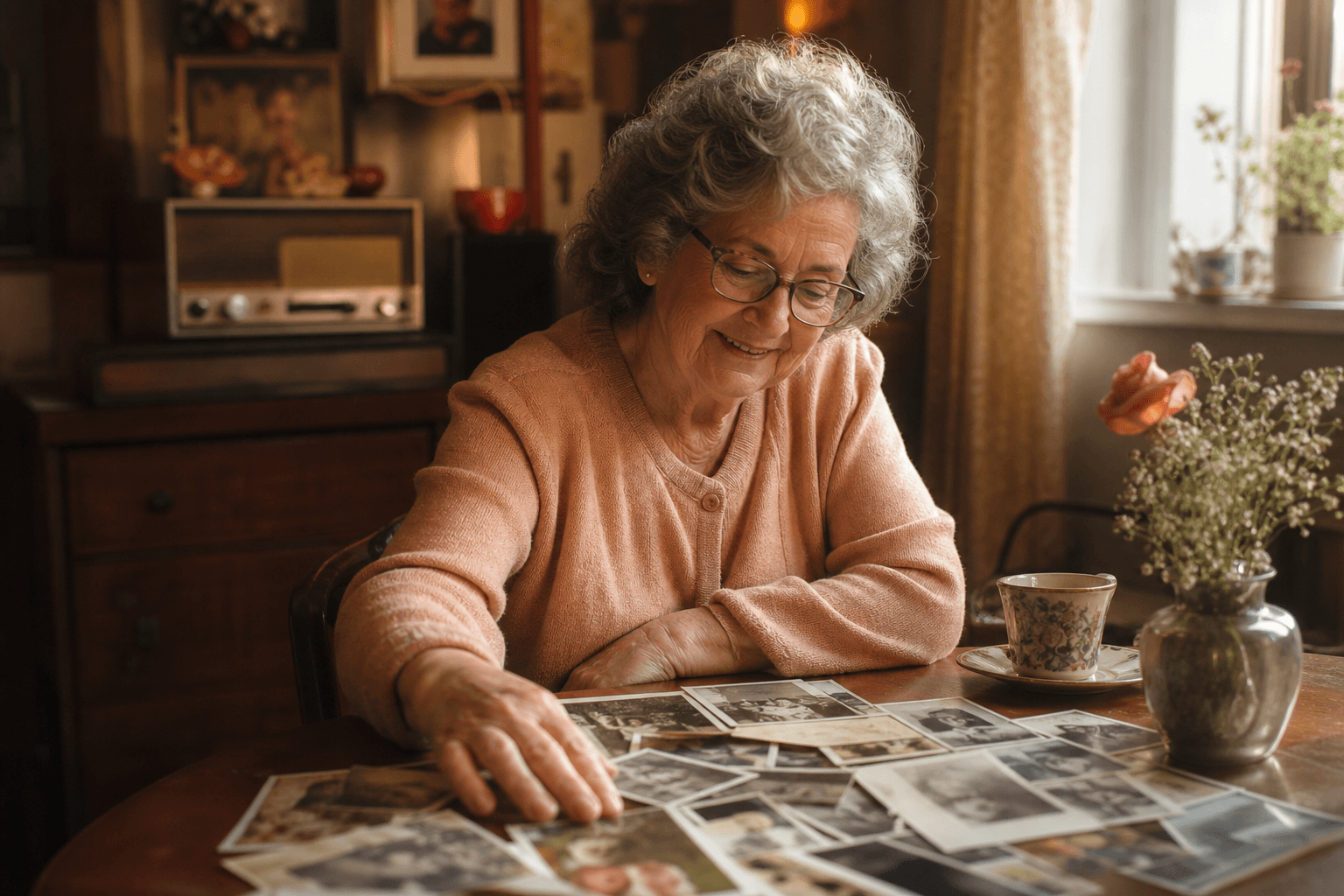
There is a kind of cruelty to memory loss — names slip, recent days vanish, and conversation grows harder. But there are doors that stay open long after others close, and two of the most reliable are photographs and music. Long after a parent struggles to recall what they had for breakfast, an old song can move them to tears or smiles, and a familiar face in a photo can spark a story. Knowing how to use these doors can give you back moments of real connection when you thought they were gone.
Why these doors stay open
The brain stores different kinds of memory in different places. Recent, factual memory is often the first to fade in dementia, but long-term memory — the songs, faces, and feelings of decades past — tends to last far longer. Music in particular has an almost magical staying power; it is woven so deeply that people who can no longer speak in sentences can still sing every word of a song from their youth. Photographs and music are not nostalgia for its own sake. They are some of the last, strongest pathways to a parent's inner world.
Using music to reach them
A few gentle ways to put music to work:
- Build a playlist from their youth. The music a person loved between roughly ages 15 and 25 is usually the most powerful. Find those songs and keep them close at hand.
- Watch what lights them up and lean into it — a hymn, a big-band tune, a song from their wedding.
- Use music to shift a mood. A favorite song can calm agitation or lift a flat afternoon faster than any conversation.
- Sing together. Even if you feel silly, joining in invites your parent to as well, and singing together is connection that needs no memory.
Using photographs to connect
Photos open conversation when open-ended questions fail:
- Make a simple memory book — large, clear photos of loved ones and meaningful places, with names labeled gently. Look through it together without quizzing ("This is your sister, Margaret — you two were close"), letting any stories come naturally.
- Keep familiar faces in view. A display that cycles through family photos brings loved ones into a parent's daily line of sight, a steady, comforting presence.
- Pair photos with stories you tell. You provide the memory aloud; your parent enjoys the feeling without the pressure to recall.
Bringing far-away faces into the picture
For families who live at a distance, keeping your faces present in a parent's daily world matters even more — recognition is reinforced by seeing you often, not rarely. A screen that shows family photos and lets your face appear easily keeps you woven into their days between visits. (This is part of what Nana Chat offers: a warm display of the family's faces, with connection always a single tap away — and for a parent with memory loss, the family can manage it all so the parent simply sees their people.) Familiar faces, shown often and gently, are a quiet form of reminiscence in themselves.
Let go of the test, keep the connection
The most important mindset shift is to stop testing and start sharing. The goal of a photo or a song is never to check whether your parent remembers — that only risks distress. The goal is the feeling: the warmth, the recognition in the body even when not in the words, the shared moment. Measure success not by what your parent can recall, but by the smile, the hum, the squeezed hand. Those moments are real connection, and with photos and music, they remain beautifully possible.
Key Takeaways
- Long-term memory for music and faces often lasts long after recent memory fades — these are open doors.
- Build a playlist from your parent's youth and use music to spark joy and ease agitation.
- Make a labeled memory book and keep familiar faces in daily view; share stories instead of quizzing.
- For distance, keep your faces present and easy to reach — tools like Nana Chat let family manage it so the parent simply sees their people.
- Stop testing, start sharing — measure success by the smile and the feeling, not by recall.
A few words explained
- Memory loss
- Difficulty recalling information or events, ranging from mild forgetfulness to the significant loss seen in dementia.
- Long-term memory
- Memories formed long ago, which often remain accessible in dementia even when recent memories fade.
- Reminiscence therapy
- Using prompts like photos, music, and familiar objects to gently revisit past memories, often improving mood and connection.
- Musical memory
- The brain's remarkable ability to retain songs and respond to music even when other memories are lost.
- Sensory trigger
- A sight, sound, smell, or touch that unlocks a memory or feeling — often more powerful than words for someone with memory loss.
- Memory book
- A simple album of labeled photos of loved ones and meaningful moments, used to prompt recognition and conversation.
- Digital photo display
- A screen or frame that cycles through family photos automatically, bringing familiar faces into a parent's daily view.
Continue reading

lonelinessstaying-connected
The Hidden Health Risks of Senior Isolation — and the Simple Antidote
Isolation is not just lonely; it is genuinely hard on an older body and mind. Here is what the research shows, and why staying connected is a form of caregiving.
4 min read

technologystaying-connected
Why Simple Wins: Designing Technology Around Older Adults
The best technology for an older adult is not the one with the most features — it is the one with the fewest barriers. Here is why simplicity is the whole game.
4 min read