lonelinessstaying-connectedwellbeing
The Hidden Health Risks of Senior Isolation — and the Simple Antidote
Isolation is not just lonely; it is genuinely hard on an older body and mind. Here is what the research shows, and why staying connected is a form of caregiving.

Listen
0:00 / 0:00
We tend to file loneliness under "sad but harmless." A shame, sure, but not a health problem. The science says otherwise, and it is worth knowing — because once you understand what isolation does to an older person, staying connected stops feeling like a nicety and starts feeling like the caregiving it actually is.
What isolation does to the body and mind
Researchers who study aging have reached a striking conclusion: chronic loneliness is roughly as harmful to long-term health as smoking. Long stretches of social isolation are linked to meaningfully higher risks of heart disease and stroke, and a higher likelihood of cognitive decline over time.
There are good reasons for this. Connection keeps the mind active and the days structured. It gets people moving, eating regularly, and noticing when something is wrong. A parent who talks to family every day is a parent whose subtle changes — in mood, memory, or health — get caught early. A parent no one hears from can slip quietly.
Isolation also tends to feed itself. Withdrawal leads to lower mood; lower mood makes reaching out feel harder; and the circle tightens. Breaking that loop early is far easier than reversing it later.
Why older adults are especially at risk
Several ordinary parts of aging stack the odds:
- Living alone. Many older adults do, especially after losing a spouse.
- A shrinking circle. Friends pass away or move; driving gets harder; the world contracts.
- Hearing and vision changes. When phone calls become a strain to follow, people quietly stop making them.
- The technology gap. The very tools that could keep them connected — video apps, group chats — are often built for people who grew up with smartphones, and feel like a locked door to those who did not.
That last barrier is the cruelest, because it is so fixable. The connection is right there on the other side of the screen. The only thing in the way is a confusing interface.
The simple antidote
You cannot eliminate every risk of aging. But the protective factor here is refreshingly low-tech in spirit: regular, warm, easy contact with people who love them.
That can look like a daily video call, a steady stream of family photos, a neighbor who stops by, a standing lunch with a friend. The form matters less than the frequency and the warmth. What protects an older person's health is the steady felt sense that they are seen, needed, and part of something.
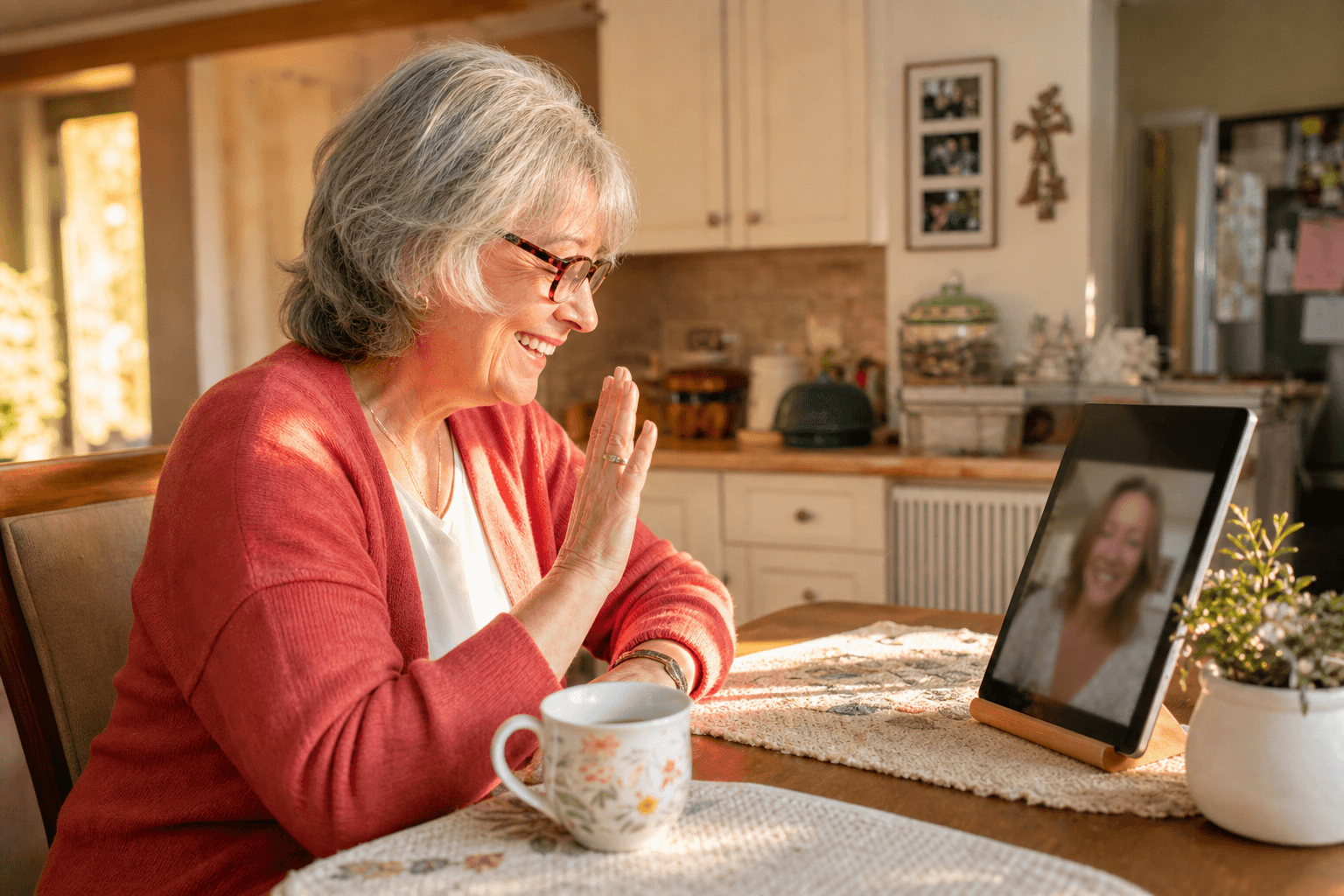
The practical key is removing the barriers. If a video call requires your parent to find an app, log in, and navigate menus, it will not become a habit — and habits are what protect health. This is precisely why Nana Chat reduces the whole thing to a face and a tap: the easier connection is, the more it happens, and the more it happens, the more it protects.
Connection is caregiving
If you have ever felt guilty that you are "only" calling, "only" sending photos, "only" keeping in touch — let that go. You are not doing a small thing. You are doing one of the most protective things available for an aging parent's heart and mind. Showing up, often and warmly, is care.
Key Takeaways
- Chronic isolation is a genuine health risk, linked to heart disease, stroke, and cognitive decline.
- Older adults are especially vulnerable due to living alone, shrinking circles, sensory changes, and the technology gap.
- The antidote is regular, warm, easy contact — frequency and warmth matter more than form.
- Removing friction is everything; one-tap tools like Nana Chat turn connection into a sustainable habit.
- Keeping in touch is not a small gesture. It is real caregiving for body and mind.
A few words explained
- Social isolation
- Having few regular contacts with other people. It is measured by how connected someone is, not by how they feel about it.
- Loneliness
- The painful sense that one's relationships fall short of the closeness one needs. A person can be isolated without feeling lonely, or lonely in a crowd.
- Cognitive decline
- A gradual loss of memory and thinking ability. Staying socially and mentally engaged is one of the things that helps protect against it.
- Cardiovascular health
- The health of the heart and blood vessels. Chronic loneliness is linked to higher rates of heart disease and stroke.
- Protective factor
- Anything that lowers a person's risk of a problem. Regular, warm social contact is a protective factor for both mind and body.
- Engagement
- Being actively involved with people, activities, and the wider world, rather than passively withdrawn from them.
- Aging in place
- Continuing to live in one's own home as one grows older, rather than moving to a care facility. Connection helps make this safer and happier.
Continue reading
lonelinessstaying-connected
Signs Your Aging Parent Is Lonely — and What Actually Helps
Loneliness in older adults is easy to miss and easy to dismiss. Here are the quiet signs to watch for, and the small, steady things that genuinely help.
5 min read

technologystaying-connected
Why Simple Wins: Designing Technology Around Older Adults
The best technology for an older adult is not the one with the most features — it is the one with the fewest barriers. Here is why simplicity is the whole game.
4 min read